
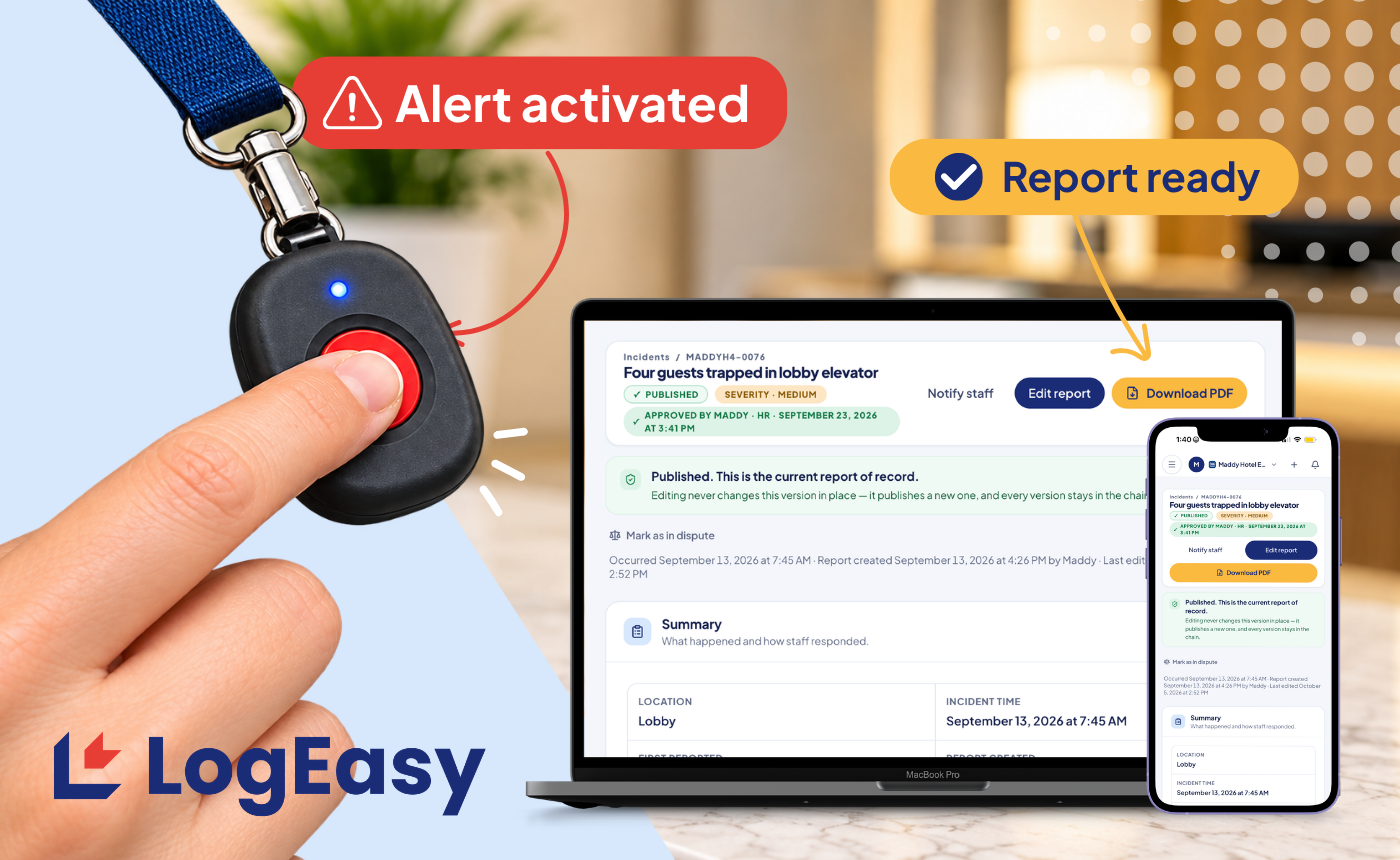
A housekeeper presses her panic button, alone in a guest room. Someone comes. The guest gets walked out, or it turns out to be nothing. Five minutes later, everyone's back to work. We made that scene up, but if you run a hotel, you've probably heard a version of it.
Now jump ahead six months. Your insurer calls and asks what actually happened that night. "Someone responded" isn't going to cut it. That gap, between pressing the button and proving what came next, is exactly what the newer laws are going after.
Pressing the button is the easy part. Proving what happened next is where the laws are headed.
It started with one city
Seattle went first, in 2016. Hotels with 60 or more rooms had to give a panic button to any hourly, non-managerial employee working alone in a guest room. See the city's official summary.
Then other places picked it up:
- In 2018, Chicago required buttons for housekeeping and room-service staff. Read the city's announcement
- In 2019, Miami Beach got picky about the hardware. An alarm that only beeps doesn't count. The device needs GPS, and skipping it can cost up to $2,000 in fines. See the compliance summary
- In 2020, New Jersey became the first whole state to require it. Read the legal alert
- Also in 2020, Illinois passed its own statewide version. Read the summary
Then the laws started asking for proof
Things went quiet for a few years. When the next wave came, it had teeth.
New York City tied panic buttons to hotel licensing in 2025. Skip it and you're not just paying a fine, you're putting your right to operate on the line. Read Littler's legal update
Washington State's law, in effect since January 2026, reaches past hotels to retail and security workers. It also adds required training and records a state agency can ask to see. Read Safety+Health Magazine's coverage
Los Angeles County went furthest. Since April 2026, hotels there need six hours of certified staff training, plus an incident report every single time a button is used, kept for three years. Read the compliance deadline summary and this wrap-up of the ordinance now in effect
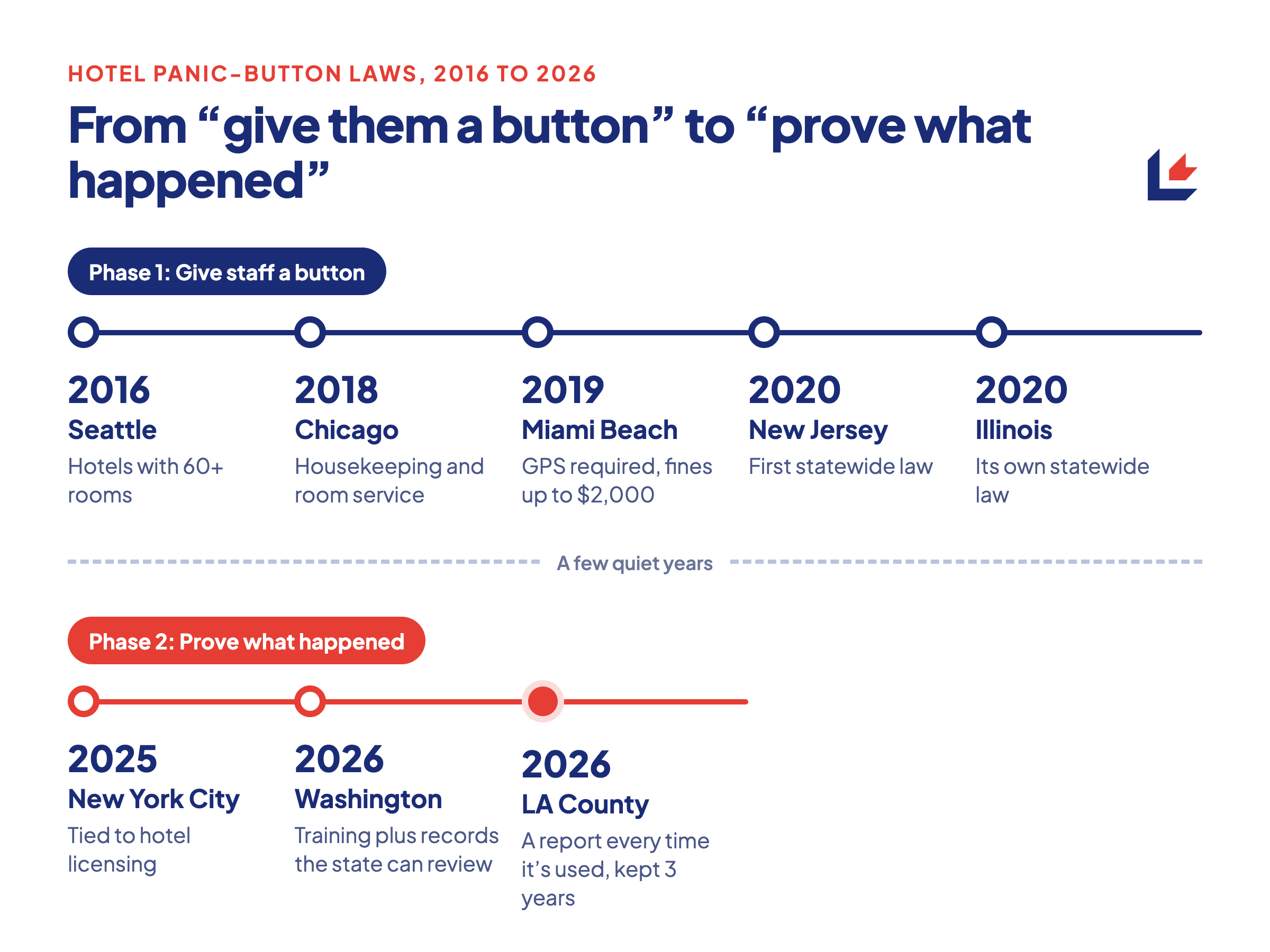
The early laws asked hotels to give staff a way to call for help. The new ones ask hotels to prove what happened when they did.
Not in one of the eight? Maybe not yet
If none of your properties are on that list, it's easy to shrug this off. We'd push back a little. Laws like these usually start in one place, work well enough, and get copied somewhere else with a few extra requirements bolted on. LA County's version is the newest, and our bet is that it's the template the next ones borrow from.
So "not my problem" is really "not my problem yet."
What "documentation" actually means
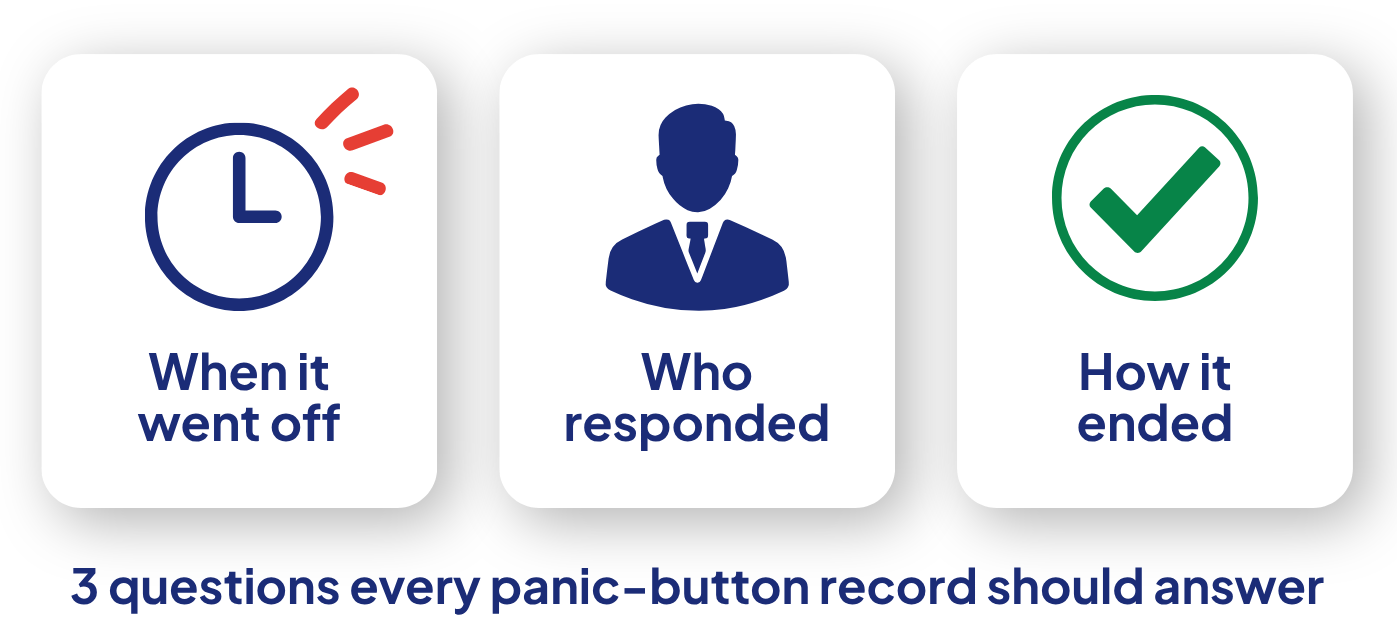
It's more concrete than it sounds. When a panic button goes off, someone should be able to show, later on, when it went off, who responded, and how it ended.
LA County writes that into law with its three-year retention rule. Washington ties it to records the state can review. And where it isn't law yet, it's still the first thing your insurer or your lawyer will ask for after something real happens.
The Hartford's latest small business claims data puts the average slip, fall, or customer injury claim at $45,000 in 2025, up from $20,000 a decade ago. A general liability case that ends up in court can cost more than $75,000 to defend. See the 2025 numbers. A clean, timestamped record won't make a claim go away, but it's one of the cheapest ways to keep those numbers from growing.
Where LogEasy fits
To be clear about what we don't do: LogEasy doesn't make panic buttons, and we're not going to tell you which device to buy or what your local law requires. That's a conversation for your attorney or regulator.
What we do is the part after the button. Go back to those three questions.
When did it go off? Your team opens a report from their phone, right there in the hallway, and it's timestamped the second it's created. Nobody's guessing at the time at the end of the shift.
Who responded? Everyone involved gets added to the report. Witnesses can write and sign their statement on their own phone, in English, Spanish, Portuguese, or Chinese. And your on-call manager gets an alert email that opens the report in one tap.
How did it end? The narrative, photos, and outcome all go in the same report. Photos are checked for AI edits when they're uploaded. Once a report is published, that version never changes. Any edit publishes a new version, and every version stays in the report's history, so you can always see what changed, who changed it, and when.
Two more things that matter for panic-button calls in particular. If a guest gets removed, you can add them to your banned individuals list so the next shift knows who they are. And because every report lives in one place, it gets easier to spot when something keeps happening, like the same floor or the same guest coming up again.
So when your insurer calls six months later, you're sending them a report, not asking around.
Forms collect information. LogEasy protects it.
Five things you can do this month
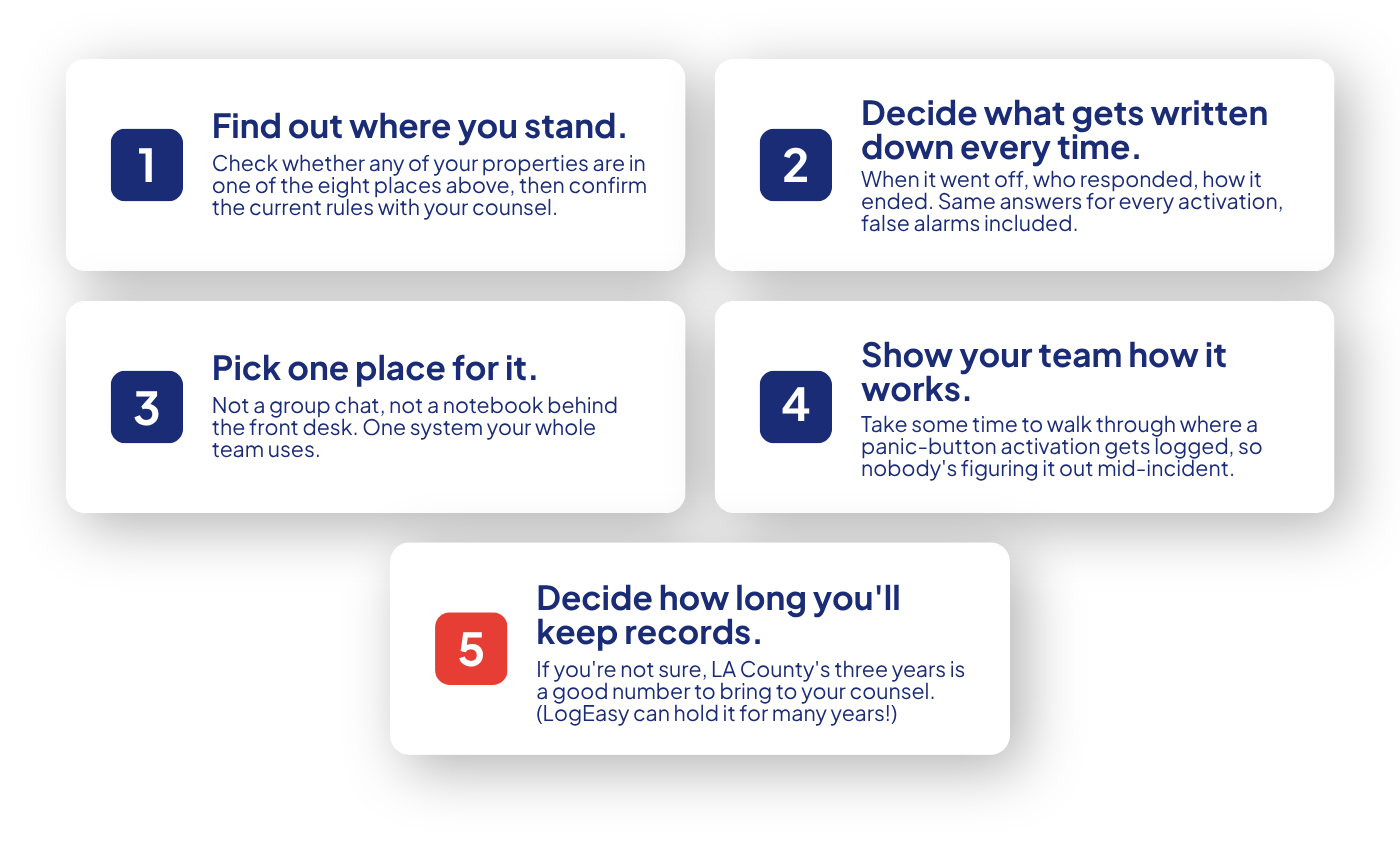
Panic buttons are a good thing. The paperwork that comes with them is less fun. These five steps make it a lot easier, whether a law requires it yet or not.
- Find out where you stand. Check whether any of your properties are in one of the eight places above, then confirm the current rules with your counsel.
- Decide what gets written down every time. When it went off, who responded, how it ended. Same answers for every activation, false alarms included.
- Keep it all in one place. Not a group chat, not a notebook behind the front desk. One system your whole team uses.
- Show your team how it works. Take two minutes at your next shift meeting to walk through where a panic-button activation gets logged, so nobody's figuring it out mid-incident.
- Decide how long you'll keep records. If you're not sure, LA County's three years is a good number to bring to your counsel.
Already due, or coming soon
If you have a property in one of those eight places, the deadline has already passed. If you don't, starting the habit today is a lot easier than starting it under a deadline.
See how it works → logeasy.app
This post is for general information, not legal advice, and requirements change. If you operate in any of the jurisdictions above, or think a similar law might be headed your way, confirm current requirements with your own counsel or local regulator before relying on anything here.
